
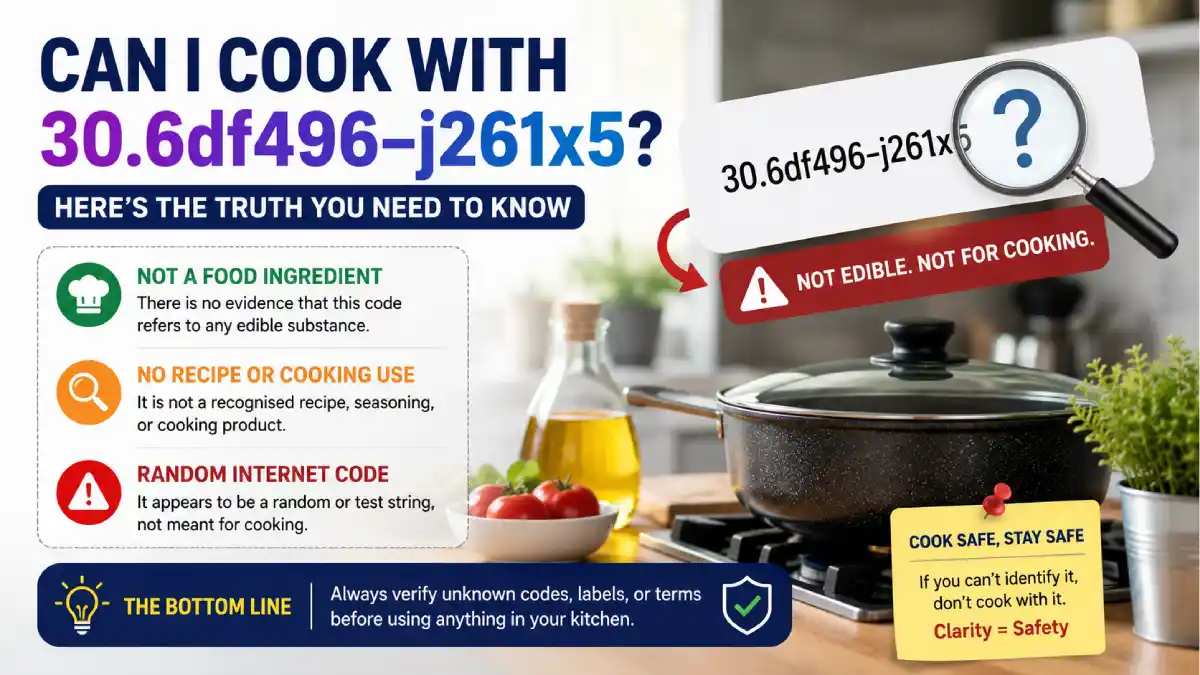
So you’ve typed in “can I cook with 30.6df496-j261x5“, likely as a search query with the intention of learning whether the term represents some sort of ingredient, cooking tool, or any item relevant to the preparation of food. To be brief, the answer is negative. While the term has the technical feel of some item of nomenclature in, say, science, there’s simply no readily available evidence suggesting that 30.6df496-j261x5 is a legitimate, known ingredient, additive, kitchen tool, or cooking process. More realistically, it looks like it could be the result of a random number generator or the product of an algorithm that somehow became viral on the web simply due to its uncanny looks.
Table of Contents
What Is 30.6df496–j261x5?
Despite looking like a technical identifier, 30.6df496–j261x5 is not recognised as:
- a food ingredient
- a recipe
- a seasoning
- a cooking oil
- a kitchen appliance
- a food additive
- a recognised scientific substance
Rather, it is almost universally acknowledged to be an arbitrary/non-sensical alphanumeric that shows up in searches and on AI-generated content, or search engine tests. It’s unlike an actual food ingredient since it has no recorded nutritional content, recognized food application, or cooking recipe.
Can I Cook with 30.6df496–j261x5?
The answer is no.
Since 30.6df496–j261x5 does not represent a real edible product, there is nothing to cook with.
The cooking ingredients must be identifiable, they have known safe usage parameters, and it is known to have some application for food, or be a Food ingredient of recognized usage. Since it has not been validated for a link to the culinary field, this code must never be assumed as ingredient or included in your food preparation recipe.
You’d find this online rather than on the cooking tips.
Why Do People Search This Phrase?
Many unusual searches become popular simply because they look mysterious.
People often assume technical-looking codes refer to:
- hidden ingredients
- secret recipes
- kitchen technology
- scientific compounds
- imported food products
In reality, many of these searches begin after someone encounters an unfamiliar code on a website, forum, or AI-generated page.
Curiosity—not cooking—is usually the reason behind the search.
Comparison Table: Real Food Ingredients vs 30.6df496–j261x5
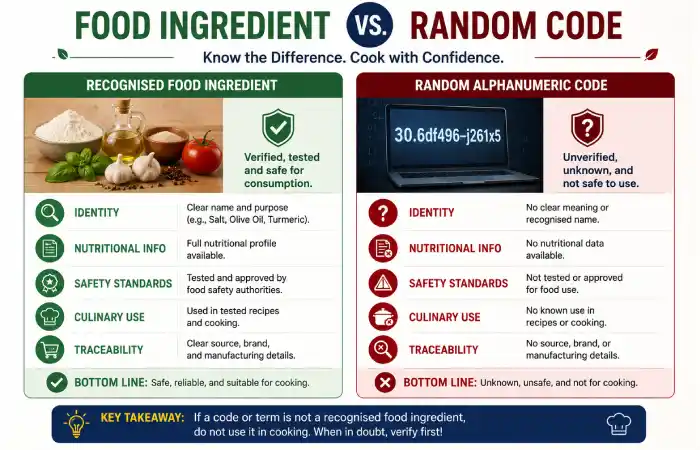
| Feature | Recognised Food Ingredient | 30.6df496–j261x5 |
| Safe for cooking | ✔ Yes | ✘ No evidence |
| Listed in recipes | ✔ Yes | ✘ No |
| Nutritional information | ✔ Available | ✘ None |
| Food safety guidance | ✔ Available | ✘ None |
| Culinary purpose | ✔ Yes | ✘ Unknown |
| Verified edible use | ✔ Yes | ✘ No |
Workflow: What to Do When You Find an Unknown Cooking Term
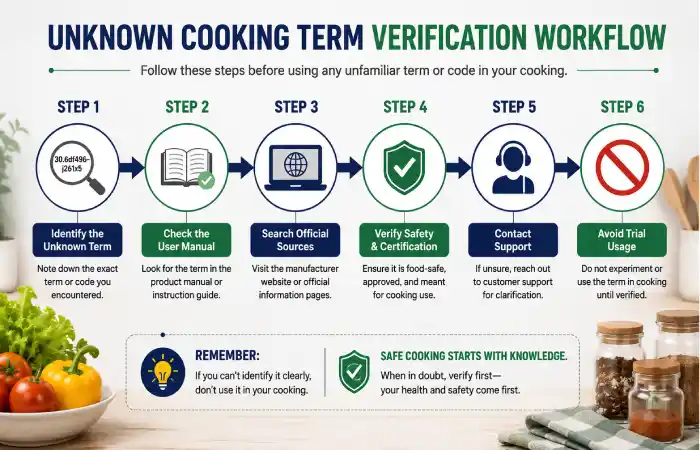
Find an unfamiliar code
↓
Check whether it appears in trusted food sources
↓
Search official food safety databases
↓
Look for recognised product information
↓
If no reliable information exists
↓
Do not treat it as food
Following this simple process can help you avoid confusion and make safer decisions in the kitchen.
Why Unknown Codes Shouldn’t Be Used in Cooking
Cooking is based on ingredients that have been identified, tested, and approved for consumption.
Using an unknown or unverified substance could create unnecessary risks.
Although 30.6df496–j261x5 is not known to represent a real substance, this example highlights an important principle:
Never cook with anything that cannot be clearly identified.
Whether it’s a powder, liquid, or packaged item, always verify its source before using it in food preparation.
Expectations Management
It’s understandable why people become curious about unusual internet phrases.
However, not every combination of letters and numbers has a hidden meaning.
Many strange-looking terms are generated automatically during software testing, AI content creation, or search engine experiments.
In the case of 30.6df496–j261x5, there is no verified evidence that it relates to cooking or food preparation.
Practical Example
Imagine you’re browsing online and someone mentions 30.6df496–j261x5 alongside cooking advice.
Without checking reliable sources, you might assume it’s:
- a spice
- a food additive
- a cooking technique
- a modern kitchen product
After researching further, you discover there are no recognised culinary references.
This demonstrates why verifying information is always better than relying on assumptions.
A Real-Life Case Study for Better Understanding
A friend once messaged me saying their smart recipe app instructed them to “add 30.6df496–j261x5 before baking.” They were genuinely worried they were missing a special ingredient.
When they showed me the screen, it turned out to be a broken recipe database field that accidentally displayed a backend identifier instead of the actual ingredient list. After refreshing the app, the correct recipe simply called for vanilla extract and baking powder.
This is a common issue in poorly synced cooking apps, especially when they rely heavily on cloud-based data systems.
Why This Kind of Confusion Happens
Modern cooking is becoming increasingly digital. We now have:
AI recipe generators
Smart ovens with Wi-Fi
App-controlled meal planners
Barcode-based grocery tracking
While this makes cooking more convenient, it also introduces technical complexity. When systems glitch, users sometimes see raw data instead of human-readable instructions.
That’s where confusing strings like 30.6df496–j261x5 come into play—they are never meant for cooking, only for machines to understand internally. For more related articles visit our website
A Simple Rule to Remember
If something looks like a mix of letters, numbers, and symbols without a recognizable food or tool name, it is almost certainly:
Not edible
Not a recipe ingredient
Not a cooking instruction
Instead, it is part of a system, device, or software process.
Keeping this rule in mind can save you from a lot of confusion when using modern cooking technology.
How to Verify Unknown Food-Related Terms
Whenever you encounter an unfamiliar cooking term:
- Search reputable cooking websites.
- Check official food safety organisations.
- Read product labels carefully.
- Avoid relying on anonymous social media posts.
- Never consume something simply because it appears online.
These habits help ensure your meals remain both safe and enjoyable.
Frequently Asked Questions
Can I cook with 30.6df496–j261x5?
No. 30.6df496–j261x5 is not recognised as a food ingredient, edible product, or cooking material.
Is 30.6df496–j261x5 an ingredient?
No. There is no evidence that it refers to any recognised culinary ingredient.
Why do people search for this phrase?
Most people search it out of curiosity after encountering the unusual code online.
Could it be a secret recipe code?
There is no verified information suggesting it is connected to recipes or cooking.
What should I do if I find unfamiliar cooking terms online?
Always verify them using reliable food safety resources before assuming they are edible or suitable for cooking.
Conclusion
Do you have a question of whether or not you can cook with 30.6df496-j261x5? Well, we have a clear answer to your inquiry and that is: no. 30.6df496-j261x5 doesn’t show up on our record of known recipes, cooking ingredients, cooking food products or cooking additive products. 30.6df496-j261x5, on the other hand, just happens to be a series of random letters and numbers.
It appears to be an ingredient with lots of interest generated over the internet, though, because searches for it were found all over the internet. Whether it is for any food preparation at all, it is always ideal to be certain you know the correct food you are utilizing while you are in your kitchen. Should it not look like any known food, don’t use it as if you do.