
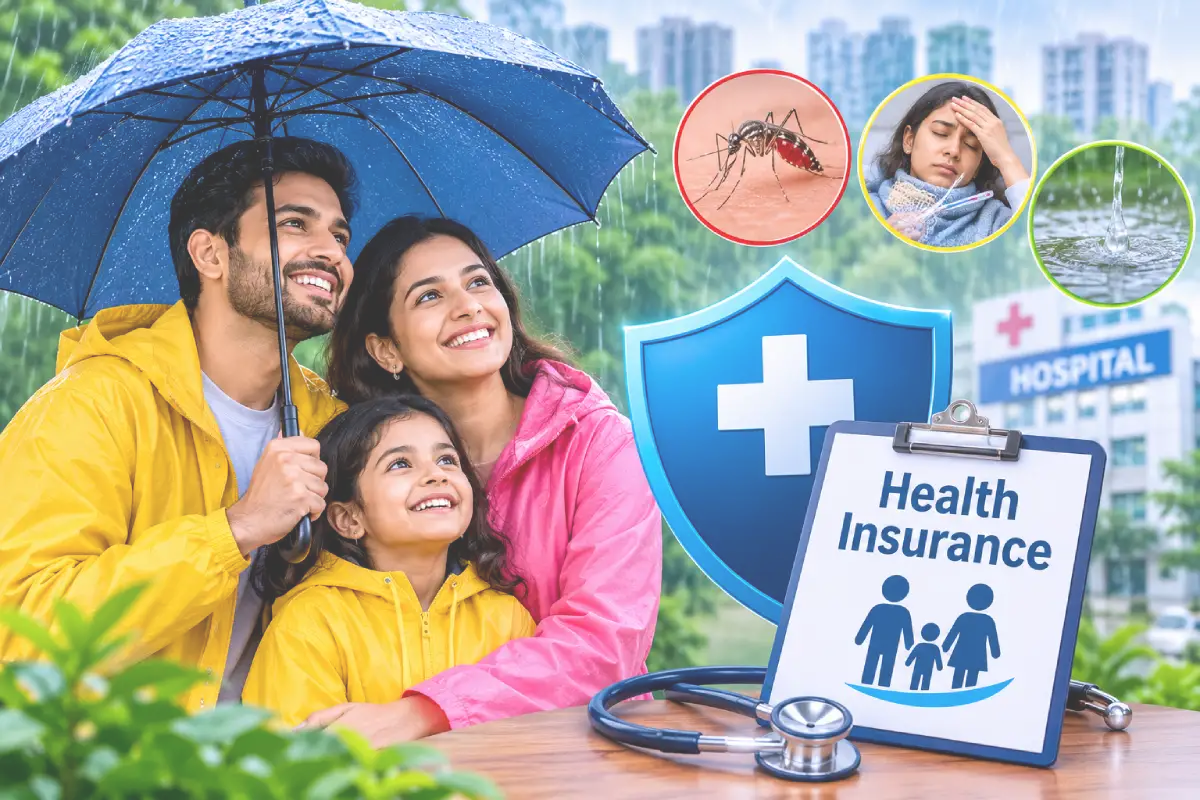
Why Health Insurance Is Essential During Monsoon
The first rains bring relief from the heat, and a lot of people look forward to them all year. They also bring a sharp rise in fever cases, stomach infections, and hospital admissions across India. Doctors see it every year from June to September, and so do insurers. If you’re going to need your health policy at any point in the year, there’s a good chance it’ll be during these months.
Table of Contents
Why Hospital Visits Rise When the Rains Arrive
Standing water is the main culprit. It’s where mosquitoes breed, and in many cities it collects on roads, in drains, on construction sites, and even in flower pots and old tires at home. Heavy rain can also mix sewage with drinking water, especially in areas where pipes leak or flood. Add damp air, packed public transport, and street food made in wet conditions, and infections spread a lot faster than usual.
Which Illnesses Are Most Common in the Monsoon?
Most monsoon illnesses fall into a few groups:
- mosquito-borne diseases like dengue, malaria, and chikungunya
- water-borne infections such as typhoid, cholera, hepatitis A, and gastroenteritis
- leptospirosis, which spreads through contact with contaminated flood water
- viral fevers, colds, and respiratory infections that pass easily in damp, crowded places
Many of these start out looking like an ordinary fever, which is why people often wait too long before seeing a doctor.
Dengue and Malaria Can Get Expensive Quickly
A mild case of dengue may only need rest and fluids at home. A serious one can mean several days in the hospital, frequent blood tests to track platelet counts, and in some cases ICU care. In a private hospital in a big city, that can add up to anything from tens of thousands of rupees to a few lakhs. Malaria and typhoid can also need hospital treatment, particularly in children and older adults. These costs come with very little warning, which is exactly the kind of expense insurance is built for.
Does Health Insurance Cover Monsoon Illnesses?
Yes. A regular health policy covers hospitalization for dengue, malaria, typhoid, leptospirosis, and other infections the same way it covers any other illness. Most plans also pay for tests and medicines for a set number of days before and after the hospital stay, which matters with dengue, where repeated blood tests are common.
Keep in mind that most basic policies only pay if you’re admitted for at least 24 hours. A doctor’s visit for a viral fever treated at home usually isn’t covered unless your plan includes outpatient benefits.
Buy Before the Rains, Not During Them
This is the part people miss. Almost every new health policy has an initial waiting period of 30 days, during which illnesses aren’t covered, only accidents. If you buy a policy in July after someone in the family gets a fever, it won’t help with that illness. The time to buy is before the monsoon starts, ideally by April or May, so the waiting period is over when the rains arrive.
Are Vector-Borne Disease Plans Worth It?
Some insurers offer small, low cost policies that cover only diseases spread by mosquitoes and other carriers, such as dengue, malaria, and chikungunya. They can be useful if you have no other cover or live in an area where these diseases are common. They aren’t a replacement for a full health policy, though, because they don’t cover anything else. Think of them as a cheap extra layer, not your main protection.
Families With Kids and Elderly Parents Face More Risk
Young children and older adults are more likely to get seriously ill from dengue, typhoid, or severe dehydration, and more likely to need a hospital stay. A family policy with enough cover for everyone matters more during these months, especially in a floater where one long hospital stay can use up a big share of the sum insured. When comparing health insurance plans for family, check the cashless network near your home, the sum insured, and how pre and post hospitalization costs are covered.
Simple Precautions Still Matter
Insurance pays the bills, but avoiding illness is always better. Don’t let water collect around the house, use mosquito nets or repellents, and keep doors and windows screened where you can. Drink boiled or filtered water, avoid raw street food during heavy rain, and wash your hands often. If a fever lasts more than two or three days, or comes with severe body ache, rashes, or vomiting, see a doctor instead of waiting it out.
Getting Ready Before the Next Monsoon
Monsoon illnesses are common, predictable, and often expensive. That makes them one of the clearest reasons to have health cover in place. Check your current policy before the season starts, make sure the sum insured is enough for a hospital stay in your city, and compare health insurance plans if yours falls short. A little planning in May can save a lot of stress in August.