
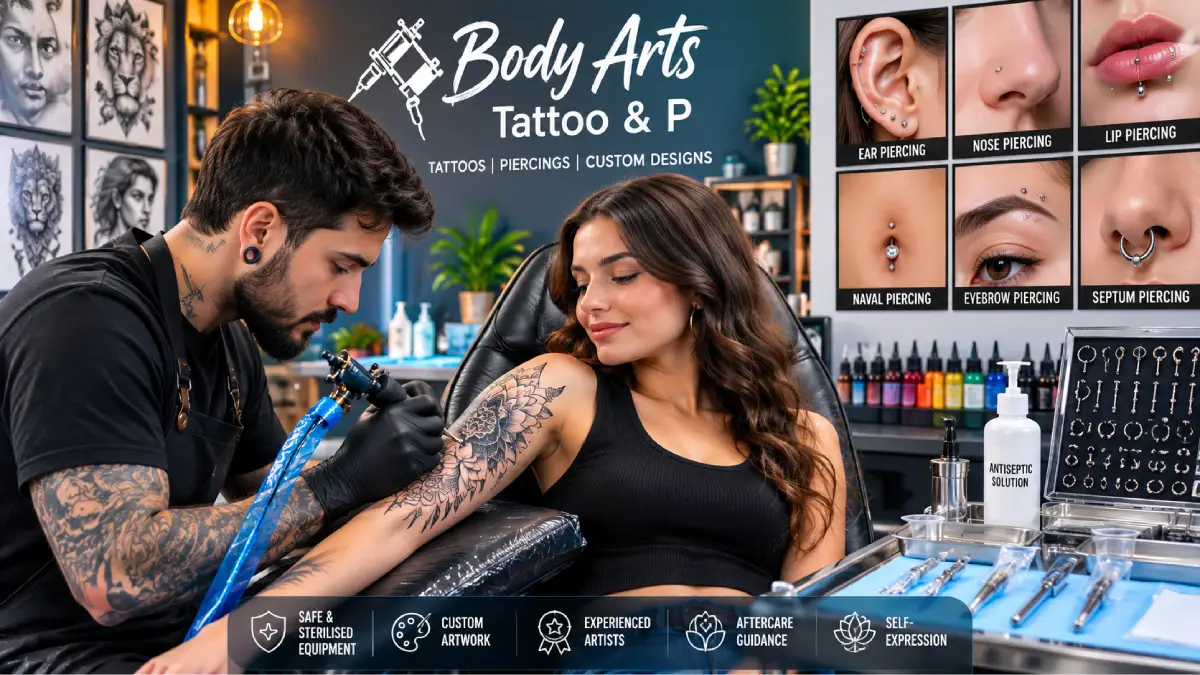
Tattooing is an antique art, spanning thousands of years & cultures. It is a celebration of individuality, expression, tradition, identity and artistry. An individual’s reasons for having their body pierced or tattooed today are wide and various, ranging from marking an event or ‘milestone’ to paying tribute to a loved one to expressing their artistic individual preferences.
If you’ve been searching for Body Arts Tattoo & P you’re probably seeking information about tattooing, body piercing, professional studios and related subjects. In this guide you’ll find what you need to know before getting a tattoo or body piercing-from selecting a design to aftercare and safety precautions.
No matter if you’re a fresh face or the proud owner of one or twenty of the area’s largest scalps, rest assured that any and all information you need to make the best decision is here in one place.
Table of Contents
What Does Body Arts Tattoo & P Mean?
The phrase Body Arts Tattoo & P generally refers to businesses or studios offering:
- Professional tattoo services
- Body piercing
- Custom tattoo design
- Tattoo cover-ups
- Cosmetic tattoos
- Jewellery fitting
- Tattoo consultations
- Aftercare advice
Many tattoo studios use similar names that combine “Body Arts” with “Tattoo & Piercing.”
Understanding Modern Body Art
Body art includes permanent and temporary modifications made for artistic, cultural, cosmetic, or personal reasons.
Common forms include:
- Tattoos
- Ear piercing
- Nose piercing
- Lip piercing
- Eyebrow piercing
- Navel piercing
- Dermal implants
- Henna art
- Scarification (less common)
- Cosmetic tattooing
Today, tattooing has become widely accepted across different professions and age groups.
Popular Tattoo Styles
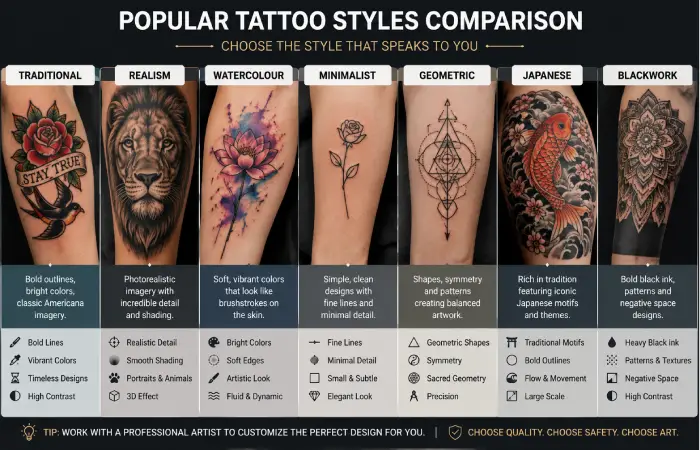
Choosing the right tattoo style is one of the biggest decisions.
Traditional
Known for:
- Bold black outlines
- Limited colours
- Classic imagery
- Anchors
- Roses
- Eagles
- Daggers
Ideal for people who appreciate timeless designs.
Realism
Realistic tattoos imitate photographs.
Common subjects include:
- Portraits
- Animals
- Landscapes
- Eyes
- Family members
These require highly experienced artists.
Watercolour
Watercolour tattoos resemble painted artwork.
Features include:
- Soft edges
- Bright colours
- Minimal outlines
- Artistic appearance
Minimalist
Minimal tattoos use:
- Thin lines
- Small designs
- Simple shapes
- Delicate symbols
Popular among first-time clients.
Geometric
These include:
- Symmetry
- Sacred geometry
- Mandalas
- Abstract shapes
Japanese
Traditional Japanese tattoos often feature:
- Dragons
- Koi fish
- Tigers
- Cherry blossoms
- Waves
Usually created as large pieces.
Blackwork
Blackwork uses:
- Heavy black ink
- Tribal influences
- Modern patterns
- Negative space
Popular Body Piercing Options
Professional piercing studios usually provide numerous options.
Ear Piercings
- Lobe
- Helix
- Tragus
- Daith
- Conch
- Industrial
Facial Piercings
- Nose
- Septum
- Eyebrow
- Lip
- Monroe
- Medusa
Body Piercings
- Navel
- Nipple
- Surface piercing
- Dermal anchors
Always discuss healing times before choosing a piercing. For more related articles visit our website
How to Choose a Professional Tattoo Studio
Not every tattoo studio offers the same quality.
Look for:
- Licensed artists
- Sterile equipment
- Disposable needles
- Clean workspace
- Good online reviews
- Portfolio of previous work
- Transparent pricing
Avoid choosing solely based on the lowest price.
Questions to Ask Before Booking
Consider asking:
- How long have you been tattooing?
- Can I see healed tattoos?
- Are your needles single-use?
- What ink brands do you use?
- How should I prepare?
- What aftercare products do you recommend?
Professional artists should answer these questions openly.
Tattoo Process Explained
Most appointments follow these steps.
Step 1
Consultation
Discuss:
- Size
- Placement
- Colours
- Budget
- Timeline
Step 2
Design
The artist prepares custom artwork or adjusts an existing concept.
Step 3
Stencil
The design is transferred to your skin.
Step 4
The artist uses a tattoo machine to deposit ink beneath the skin.
Step 5
Cleaning
The tattoo is cleaned and wrapped before you leave.
Does Getting a Tattoo Hurt?
Pain varies depending on:
- Placement
- Skin sensitivity
- Tattoo size
- Session length
More painful areas include:
- Ribs
- Feet
- Neck
- Fingers
- Spine
Less painful areas include:
- Forearm
- Shoulder
- Calf
- Outer thigh
Everyone experiences pain differently.
Tattoo Healing Timeline
| Healing Stage | Time |
| Initial redness | 1–3 days |
| Scabbing | 4–10 days |
| Peeling | 1–3 weeks |
| Surface healing | Around 1 month |
| Complete healing | 2–3 months |
Proper aftercare improves healing.
Tattoo Aftercare Tips
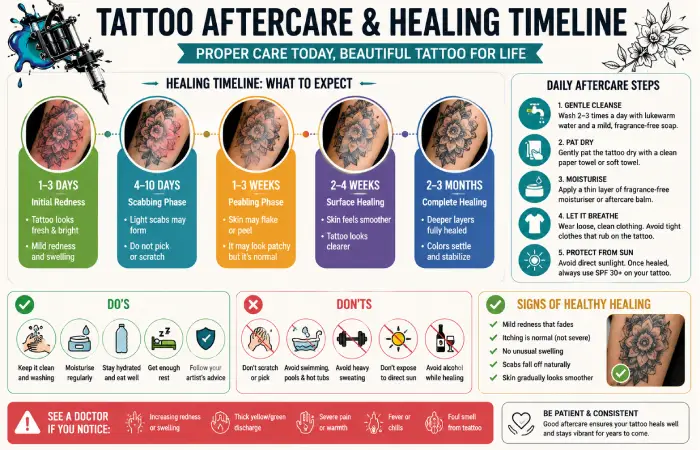
Follow your artist’s instructions carefully.
General recommendations include:
- Wash gently with fragrance-free soap.
- Pat dry with a clean towel.
- Apply a thin layer of recommended moisturiser.
- Avoid swimming until healed.
- Stay out of direct sunlight.
- Do not scratch peeling skin.
- Wear loose clothing over fresh tattoos.
Piercing Aftercare
Healing depends on the piercing location.
General care includes:
- Clean twice daily using sterile saline solution.
- Avoid touching with dirty hands.
- Do not rotate jewellery unnecessarily.
- Avoid swimming in pools during early healing.
- Follow your piercer’s guidance.
Tattoo Costs
Pricing varies by:
- Artist experience
- City
- Design complexity
- Colours
- Size
- Session duration
Typical factors affecting cost:
- Small tattoos generally cost less than large custom pieces.
- Full sleeves or back pieces often require multiple sessions.
- Custom artwork may involve a consultation or design fee.
Tattoo Safety
Choose studios that prioritise hygiene.
A safe studio should:
- Use sterilised equipment.
- Wear disposable gloves.
- Open new needles in front of clients.
- Use single-use ink caps.
- Properly dispose of medical waste.
Signs of Infection
Contact a healthcare professional if you notice:
- Increasing redness after several days
- Thick yellow or green discharge
- Severe swelling
- Fever
- Persistent pain
- Unpleasant odour
Early treatment helps prevent complications.
Tattoo Removal
If you change your mind, laser tattoo removal is the most common option.
Factors affecting removal include:
- Ink colour
- Tattoo age
- Skin type
- Tattoo depth
- Number of sessions required
Complete removal often takes multiple treatments.
Tattoo Trends in 2026
Popular trends include:
- Fine-line tattoos
- Botanical artwork
- Micro realism
- Patchwork sleeves
- Anime tattoos
- Cyberpunk designs
- UV-inspired artwork
- Minimal blackwork
- Ornamental tattoos
- Nature-inspired themes
Benefits of Professional Tattoo Studios
Professional studios typically provide:
- Custom artwork
- Safe procedures
- Experienced artists
- High-quality equipment
- Better healing guidance
- Sterile environment
- Ongoing support
Mistakes to Avoid
Many first-time clients regret rushing the process.
Avoid:
- Choosing the cheapest artist
- Ignoring aftercare
- Getting tattooed while intoxicated
- Copying designs without permission
- Skipping consultations
- Removing the protective bandage too early
Frequently Asked Questions
Is tattoo ink permanent?
Yes. Tattoo ink is designed to remain beneath the skin, although fading naturally occurs over time.
How long do tattoos take to heal?
Surface healing generally takes around two to four weeks, while complete healing may take two to three months.
Can I exercise after getting a tattoo?
Light activity is usually possible, but avoid heavy sweating, friction, and swimming until the tattoo has healed sufficiently.
Are body piercings safe?
When performed by trained professionals using sterile equipment and followed by proper aftercare, body piercings are generally considered safe.
Can tattoos fade?
Yes. Sun exposure, ageing, skin changes, and inadequate aftercare can contribute to fading over time.
Final Thoughts
Here to guide you: From getting your very first tattoo to choosing the perfect piercings to ensuring they heal nicely. If you do choose to use a piercing service (or to apply for a job with one), please do your research on the artist you plan on choosing, examine previous portfolios, have a chat, plan you desired result, discuss aftercare (as discussed previously), and take on what you hear from your piercing professional on how to care for your freshly injected artwork. When you plan ahead your tattoo or piercing will last you a long time.