
Many people search online asking “can laturedrianeuro spread”, often after seeing the word on social media, in a conversation, or through an online search. Though, this enquiry gifts an important challenge: there is no recognised medical diagnosis or scientific condition officially named “laturedrianeuro.”
Table of Contents
This does not necessarily mean your concern is invalid. Instead, it suggests that the term may be:
- A spelling mistake
- An autocorrect error
- A mistranslation
- A phonetic spelling of another medical condition
- An unofficial internet term
Understanding what the intended condition might be is essential before deciding whether it can spread or requires medical attention.
Definition
The appearance “can laturedrianeuro spread” does not agree to any known disease described by organizations such as the World Health Organization (WHO), National Library of Medicine (NLM) or current clinical literature bases.
There is no medical or biological data or evidence to suggest that if such disease exist and were classified as “laturedrianeuro” would be transmissible, contagious, hereditary or transmittable.
Why This Search Appears Online
Health-related searches often contain typing errors.
Examples include:
- Misspelled neurological disorders
- Incorrect medicine names
- Auto-translated medical words
- Misheard diagnoses during medical consultations
Someone searching for “laturedrianeuro” may actually be referring to another neurological or infectious condition.
Could It Be a Misspelling?
Several recognised medical conditions have names that sound somewhat similar.
| Possible Intended Condition | Can It Spread? | Notes |
| Neuroinfection | Sometimes | Depends on the infection causing it. |
| Neuralgia | No | Pain disorder affecting nerves. |
| Neuropathy | No | Usually caused by diabetes, injury or vitamin deficiency. |
| Neuritis | No | Inflammation of nerves rather than a contagious illness. |
| Neurodegenerative disease | No | Progressive disorders that are not infectious. |
This comparison illustrates why identifying the correct medical term is important before searching for symptoms or treatment.
Can Laturedrianeuro Spread?
Based on currently available medical knowledge, there is no verified evidence that a condition called “laturedrianeuro” exists or spreads between people.
If you intended another illness, the answer depends entirely on that condition.
For example:
- Viral infections affecting the nervous system may spread.
- Genetic neurological disorders do not spread from person to person.
- Autoimmune neurological diseases are generally not contagious.
- Degenerative neurological disorders are not infectious.
Causes of Laturedrianeuro: What We Know Now
Current research on Laturedrianeuro highlights the relationship between genetic factors, environmental triggers, and lifestyle influences.
Genetic predisposition looks to play an important role, while specific environmental conditions have been identified as potential catalysts for the condition.
Additionally, the impact of lifestyle habits on the onset and progression of Laturedrianeuro is still being investigated. For more related articles visit our website
The Role of Genetic Factors
Although various environmental factors are often considered in the study of Laturedrianeuro, genetic factors play a major role in its etiology.
Key aspects include:
- Genetic predisposition affecting susceptibility
- Hereditary factors influencing disease manifestation
- Potential gene-environment interactions
- Family history as an indicator of risk
- Ongoing research to identify specific genes
Understanding these aspects is vital for developing targeted interventions and improving patient outcomes.
Identifying environmental triggers
Understanding the environmental triggers associated with Laturedrianeuro is fundamental to grasping its complex etiology.
- Research suggests that exposure to environmental pollutants contributes significantly to the onset of this condition.
- Furthermore, seasonal variations can exacerbate symptoms, highlighting the importance of monitoring environmental factors.
- Identifying these triggers can facilitate the development of prevention strategies and improve our understanding of how external elements influence the development of Laturedrianeuro.
Analyzing the influence of lifestyle
Lifestyle-related factors play a significant role in the development and progression of Laturedrianeuro.
Key influences include:
- Poor dietary habits
- Inadequate stress management
- A sedentary lifestyle
- Poor sleep quality
- Alcohol and drug abuse
Understanding these factors is vital for persons seeking to decrease risks and improve their overall well-being.
Ultimately, it is essential to foster a proactive approach to health and lifestyle choices.
Symptoms of Laturedrianeuro: how it affects patients
How do symptoms of Laturedrianeuro manifest in affected individuals?
- Patients experience a diversity of symptoms with varying severity, which can significantly impact their daily lives.
- Common manifestations include fatigue, cognitive impairments, and physical discomfort.
- Patient experiences highlight the unpredictable nature of symptom severity, often leading to emotional distress and difficulties in performing routine tasks.
- Understanding these symptoms is essential for establishing effective support and treatment strategies.
Current research on Laturedrianeuro: insights and findings
Ongoing research on Laturedrianeuro reveals a complex interaction of biological, ecological, and genetic factors that contribute to its pathology.
Current studies highlight significant findings with broad implications for research:
- Identification of new biomarkers
- Exploration of environmental triggers
- Evaluation of genetic predisposition
- Impact of lifestyle-related factors
- Potential therapeutic targets
These insights aim to improve understanding and foster innovative approaches for the effective management of this condition.
Concerns about transmission: Can Laturedrianeuro spread?
What factors determine whether Laturedrianeuro can spread?
Key aspects include the route of transmission, environmental stability, and host susceptibility. Understanding these elements is essential for assessing transmission risks.
- Infection prevention strategies, such as hygiene practices and vaccination, play a key role in mitigating potential transmission.
- Continued research is essential to clarify the complexities of this condition and to inform public health interventions effectively.
Public helth implications: meeting the challenge
The potential for Laturedrianeuro to spread has major implications for public health strategies.
- Raising public awareness is essential.
- Developing effective prevention strategies is essential.
- Collaboration between health organizations and communities is required.
- Educational campaigns should focus on high-risk populations.
- Surveillance systems need to be wired to ensure early detection.
Addressing these challenges will enable individuals and communities to reduce the risks related with this condition.
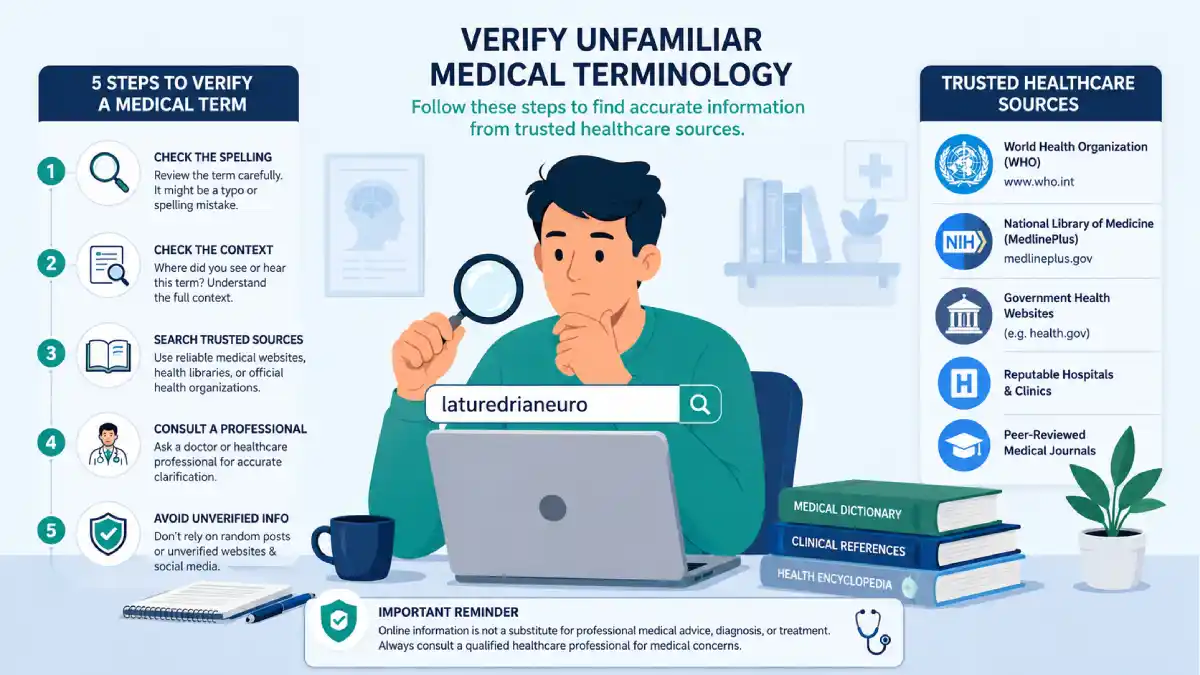
Workflow: What Should You Do If You Encounter This Term?

Step 1
Check the spelling carefully.
↓
Step 2
Look at where you found the word.
↓
Step 3
Determine whether it refers to:
- A disease
- A medicine
- A symptom
- A hospital department
- A research paper
↓
Step 4
Search trusted medical websites using corrected spelling.
↓
Step 5
Consult a qualified healthcare professional if the term came from a medical report or diagnosis.
Why Accurate Medical Names Matter
Medical terminology is highly specific.
A single missing letter can completely change the meaning of a diagnosis.
For example:
- Neuritis
- Neuralgia
- Neuropathy
- Neuroblastoma
These are entirely different conditions despite having similar prefixes.
Using the correct spelling improves:
- Search accuracy
- Medical advice quality
- Treatment understanding
- Communication with healthcare providers
Expectations Management
When searching online, it is natural to hope for a quick answer. However, internet searches cannot replace a professional medical assessment.
In this situation, expectations should remain realistic:
What online information can do
- Explain recognised medical terms
- Help understand symptoms
- Direct readers towards reliable resources
What online information cannot do
- Confirm an unknown diagnosis
- Determine whether an unidentified illness spread
- Replace laboratory tests or medical examinations
- Provide personalised treatment advice
Common Reasons People Ask Whether a Disease Spreads
People often ask this question because they are worried about family members or close contacts.
Common concerns include:
- Is it contagious?
- Can I catch it by touching someone?
- Does it spread through the air?
- Is it inherited?
- Can it affect other organs?
Each of these questions has different answers depending on the actual medical condition involved.
Signs You Should Seek Medical Advice
Rather than focusing only on an unfamiliar term, pay attention to symptoms.
Seek medical assessment if you experience:
- Persistent numbness
- Muscle weakness
- Difficulty speaking
- Severe headaches
- Sudden vision changes
- Problems with balance
- Confusion
- High fever accompanied by neurological symptoms
Prompt evaluation is particularly important if symptoms appear suddenly.
Reliable Sources for Medical Information
When researching health topics, prioritise information from:
- Government health agencies
- Universities
- Medical hospitals
- Peer-reviewed journals
- International health organisations
Be cautious of:
- Anonymous blogs
- Social media rumours
- Unverified discussion forums
- Websites without medical references
Comparison: Reliable vs Unverified Health Information
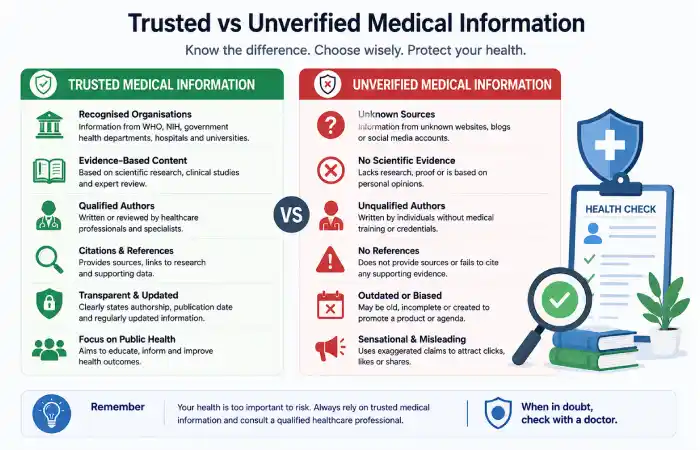
| Reliable Sources | Unverified Sources |
| Medical organisations | Anonymous websites |
| Government health portals | Viral social media posts |
| Peer-reviewed journals | Unreferenced articles |
| Hospital websites | Rumour-based content |
| Licensed healthcare providers | Unsupported personal claims |
Frequently Asked Questions
Can laturedrianeuro spread from one person to another?
There is no recognised medical condition officially called laturedrianeuro, so there is no evidence that it spreads. If the term refers to another illness, the answer depends on that specific condition.
Is laturedrianeuro contagious?
Current medical literature does not recognise this term as a diagnosed disease. Therefore, it cannot be classified as contagious.
Could laturedrianeuro be a spelling mistake?
Yes. It may be a misspelling, typing error or phonetic version of another neurological or medical condition.
Where can I verify unfamiliar medical terms?
Check trusted health organisations, recognised medical dictionaries or consult a healthcare professional for clarification.
Should I worry if I searched “can laturedrianeuro spread”?
Searching an unfamiliar medical term is common. Rather than worrying, try to identify the correct spelling or context before drawing conclusions.
Conclusion
Based on a search of the term “can laturedrianeuro spread” there does not appear to be any currently recognized disorder by this name in standard medical texts. Consequently, there is no scientific literature or proof that this condition is spread or is a contagious disease.
Should you have found this info through an article, discussion, or posted statement related to medical literature or personal health information, double check the spelling & discuss the anxieties with an real medical expert. It is always best to use validated medical resources for correct diagnosis.