
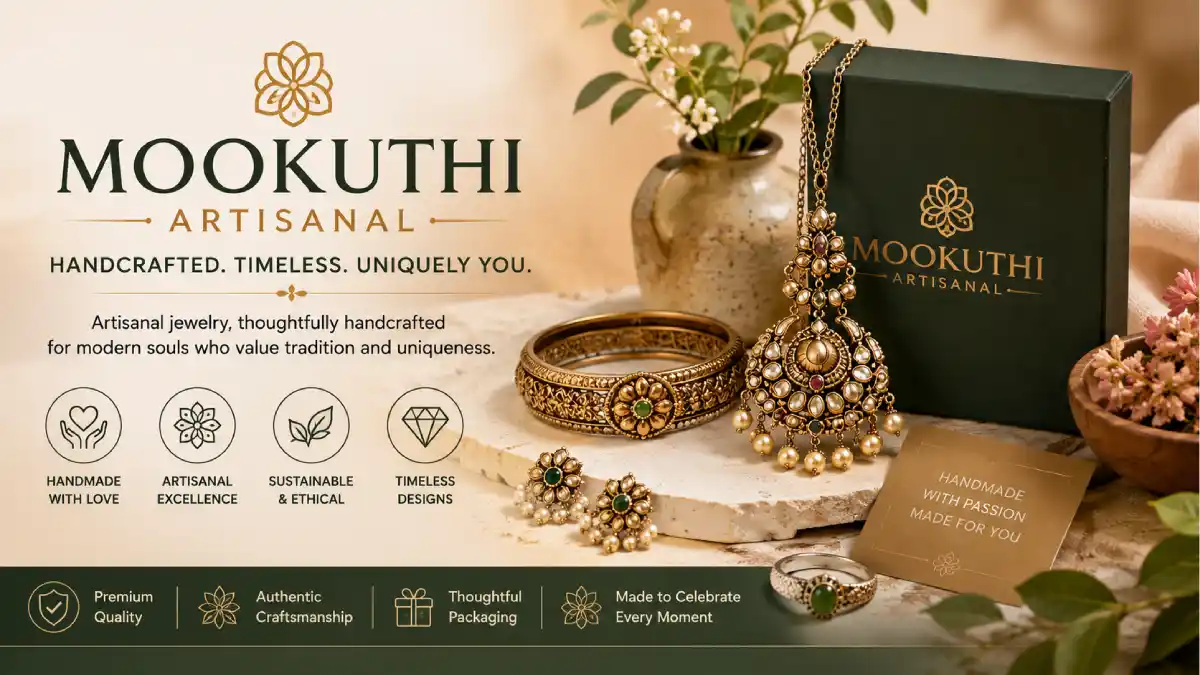
For centuries, Nose jewelry has held great significance and plays a vital role in people’s identity in many cultures and fashion practices in South Asia. Today, consumers are not willing to compromise on unique jewelry designs anymore and are shifting their choices towards customized or handcrafted designs that speak for their personal choices. The ever-growing fascination towards this type of jewelry has led to an increasing number of search queries related to “Mookuthi Artisanal”.
It can also be described as an emerging segment for traditional jewelry with a hint of contemporary elegance.
Whether it’s for your first handcrafted nose pin or an addition to your existing collection, you should be well aware of the materials, crafting techniques, costs and maintenance of artisan mookuthi to be well informed. This guide provides a pragmatic outlook on all aspects of artisanal mookuthi jewelry.
Table of Contents
Mookuthi Artisanal at a Glance
| Feature | Details |
| Product Type | Handcrafted nose jewellery |
| Common Names | Mookuthi, Nose Pin, Nose Stud |
| Jewellery Category | Fashion and Fine Jewellery |
| Materials | Gold, Silver, Platinum, Titanium, Brass, Gemstones |
| Craftsmanship | Handmade or artisan-crafted |
| Target Audience | Women and jewellery enthusiasts |
| Suitable For | Daily wear and special occasions |
| Customisation | Often available from artisan jewellers |
What is Mookuthi Artisanal?
Mookuthi, the South Indian way “A Mookuthi is a traditional nose ornament used primarily in India and some nearby countries. The word is widely used in South Indian languages to denote a nose pin or nose stud.” An artisanal mookuthi ‘When you hear the jewellery is called artisanal, it generally means it is crafted by an artisan and not an automated process’ explains an artisan working in India.
These pieces tend to have higher levels of detailing, interesting finishes and often apply traditional methods to create a unique piece of jewellery.
These types of pieces tend to be slightly more irregular than those made in a factory – whether that’s in the shape, texture or detailing, the artisans who make these kinds of items tend to consider those as qualities, not flaws.
The Cultural Significance of Mookuthi
For many people, a mookuthi is more than an accessory. It can represent:
- Cultural heritage
- Family traditions
- Personal identity
- Fashion preferences
- Religious customs
- Milestone celebrations
The tradition of adorning the nose is present in different parts of the country with ladies wearing jewellery during Indian Weddings, festivals and ceremonies.
While the tradition remains very prevalent even today; the popularity of the ‘mookuthi’ has transcended cultures and has even made a place in people’s daily wardrobes as a stylish fashion accessory. Contemporary jewellery makers have taken traditional artisanal techniques and incorporated them in a modern style of creating the ‘mookuthi’, which makes it appropriate for formal gatherings as well as daily use.
Why Artisanal Jewellery is Becoming Popular
Consumers are increasingly looking for jewellery that feels personal rather than mass-produced.
Some reasons include:
- Appreciation for handcrafted work
- Support for local artisans
- Unique designs
- Better finishing
- Small-batch production
- Traditional craftsmanship
- Sustainable purchasing choices
Although handcrafted jewellery may cost more than factory-made alternatives, many buyers value the individuality and workmanship that artisanal pieces provide.
Key Features of Mookuthi Artisanal Jewellery
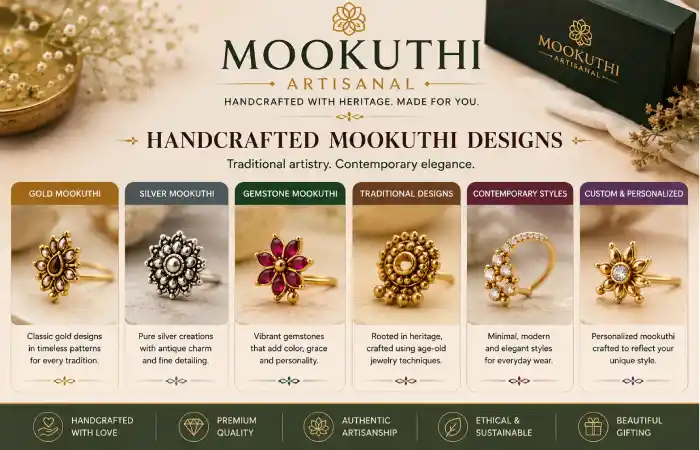
High-quality artisanal mookuthi pieces commonly offer several distinctive features.
Handcrafted Details
Each piece is carefully shaped, polished and finished by skilled jewellers, resulting in small details that machines often cannot replicate.
Traditional Design Elements
Many designs draw inspiration from Indian temple jewellery, floral motifs, peacocks, leaves and geometric patterns.
Modern Styling Options
Today’s artisans also produce minimalist nose pins that complement contemporary fashion.
Wide Material Choices
Depending on the jeweller, materials may include:
- 22K Gold
- 18K Gold
- Sterling Silver
- Platinum
- Titanium
- Surgical Steel
- Brass
- Copper
- Diamonds
- Cubic Zirconia
- Pearls
- Semi-precious gemstones
Comfortable Fit
Many handcrafted nose pins are designed for extended daily wear with smooth edges and secure fastenings.
Specifications Overview
| Specification | Typical Details |
| Product Type | Handmade Nose Pin |
| Craftsmanship | Artisan Handmade |
| Common Materials | Gold, Silver, Platinum, Titanium |
| Stone Options | Diamond, CZ, Pearl, Ruby, Emerald |
| Finish | Matte, High Polish, Antique |
| Weight | Lightweight |
| Usage | Daily or Occasion Wear |
| Skin Compatibility | Depends on material quality |
| Maintenance | Regular gentle cleaning |
Materials Used in Mookuthi Artisanal Jewellery
One of the defining characteristics of artisanal jewellery is the careful selection of materials. The choice of metal affects durability, appearance, comfort and price.
Gold
Gold remains one of the most popular choices because it is durable, resistant to corrosion and suitable for long-term wear. Artisans often work with 18K or 22K gold depending on the desired balance between purity and strength.
Sterling Silver
Sterling silver offers a bright finish and is generally more affordable than gold. It may require occasional polishing to maintain its shine.
Platinum
Platinum is valued for its strength and natural white colour. It is often chosen for premium handcrafted jewellery and provides excellent durability for everyday wear.
Titanium
Titanium is lightweight, highly durable and commonly recommended for people with sensitive skin due to its hypoallergenic properties.
Gemstones
Artisanal mookuthi designs may include:
- Diamonds
- Pearls
- Rubies
- Emeralds
- Sapphires
- Cubic Zirconia
The choice of gemstone influences both the appearance and the overall cost of the jewellery.
How a Mookuthi Artisanal Piece is Created (Workflow)
Creating handcrafted nose jewellery involves several stages, each requiring skill and attention to detail.
Design concept
↓
Metal selection
↓
Hand shaping and forming
↓
Stone setting (if applicable)
↓
Hand polishing
↓
Quality inspection
↓
Cleaning and finishing
↓
Packaging
↓
Customer purchase
Although techniques vary between jewellers, artisanal production generally takes longer than mass manufacturing because much of the work is completed by hand.
Performance Expectations
A well-crafted artisanal mookuthi can provide excellent durability and long-lasting beauty when cared for properly. However, its performance depends on several factors:
- The quality of the metal
- Daily handling
- Exposure to chemicals
- Proper storage
- Regular cleaning
Handcrafted jewellery is not immune to scratches or wear. Softer metals, such as high-purity gold, may develop minor marks over time, while silver may tarnish if not stored correctly. These changes are normal and can often be managed with appropriate care.
Expectations Management
It is helpful to have realistic expectations before purchasing artisanal jewellery.
- Every handmade piece may have slight variations in finish or detailing.
- Higher prices often reflect skilled craftsmanship and quality materials rather than brand name alone.
- Handmade jewellery typically requires a little more care than inexpensive mass-produced accessories.
- Precious metals and natural gemstones may vary slightly in colour, texture or appearance.
- Artisanal jewellery is designed to offer uniqueness and craftsmanship, not machine-perfect uniformity.
These characteristics are often what make handcrafted jewellery special and desirable.
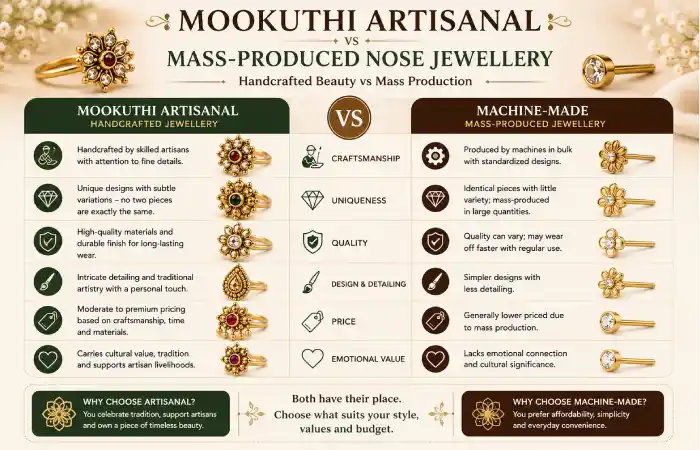
Mookuthi Artisanal vs Mass-Produced Nose Jewellery
| Feature | Mookuthi Artisanal | Mass-Produced Nose Jewellery |
| Craftsmanship | Handmade by skilled artisans | Machine manufactured |
| Design Uniqueness | High | Often standardised |
| Material Quality | Usually premium options available | Varies widely |
| Personalisation | Frequently available | Limited |
| Production Scale | Small batches | Large-scale manufacturing |
| Price | Moderate to premium | Budget to mid-range |
| Cultural Value | Strong emphasis on heritage | Mainly fashion-focused |
| Attention to Detail | High | Consistent but less individual |
A handcrafted mookuthi is often preferred by buyers who value originality, cultural craftsmanship and long-term quality, while mass-produced options may suit those seeking affordability and uniform designs.
Pros and Cons of Mookuthi Artisanal Jewellery
Every jewellery purchase involves balancing quality, price and personal preferences. Handcrafted mookuthi pieces offer several advantages, but they also have some practical limitations.
| Pros | Cons |
| Unique handcrafted arrival | Usually prices more than mass-produced jewellery |
| Supports traditional artisans | Handmade production may take longer |
| Often available in premium metals | Limited stock for exclusive designs |
| Better attention to detail | Some designs require extra care |
| Suitable for gifting | Custom orders may not be returnable |
| Can be personalised | Valuable metals increase general cost |
Essentially, buyers that look for artisanal jewellery value creation, not low cost.
Who Should Buy Mookuthi Artisanal Jewellery?
An artisanal mouthy may be a good choice if you:
- Prefer handmade jewellery over factory-made designs.
- Value traditional Indian craftsmanship.
- Want a unique accessory that stands out.
- Are buying jewellery for weddings, festivals or special occasions.
- Appreciate small details and personalised designs.
- Plan to keep the jewellery for many years.
Many also prefer to buy handcrafted nose pins as gifts since each handcrafted nose pin will tell a much better personal story as compare to mass produced ones.
Who Should Avoid It?
Although handcrafted jewellery has numerous strengths, it may not outfit everyone.
You may prefer another option if you:
- Want the cheapest available nose pin.
- Frequently lose jewellery.
- Need several identical pieces.
- Prefer ultra-modern machine-made designs.
- Have known allergies to certain metals without checking material specifications.
It’s also advisable to invest in high-quality hypoallergenic metals if you tend to develop skin reactions, such as platinum or nickel-free gold or even titanium.
Is Mookuthi Artisanal Legitimate?
One frequently posed query relates to whether an authentic jeweler artisan truly exists. In contrast to solely considering marketing claims; analyze following:
Hallmark Certification
Gold and silver jewellery should have recognised hallmarking where applicable.
Material Disclosure
A trustworthy seller clearly states:
- Metal purity
- Stone type
- Weight
- Dimensions
- Care instructions
Return Policy
Reliable jewellery businesses usually explain:
- Return conditions
- Exchange policy
- Warranty (if available)
Customer Support
Legitimate sellers normally provide:
- Contact information
- Order tracking
- Responsive customer service
Authentic Product Images
Good retailers use clear photographs that accurately represent their products instead of heavily edited images.
Checking these factors helps reduce the risk of purchasing counterfeit or poor-quality jewellery.
Alternatives to Mookuthi Artisanal
If a handcrafted mookuthi does not suit your preferences, there are several alternatives.
| Alternative | Best For |
| Machine-made Gold Nose Pins | Budget-conscious buyers |
| Sterling Silver Nose Studs | Everyday wear |
| Diamond Nose Pins | Premium jewellery |
| Clip-on Nose Pins | Non-pierced noses |
| Titanium Nose Studs | Sensitive skin |
| Platinum Nose Pins | Luxury collections |
Each option has its own advantages depending on your budget, lifestyle and aesthetic preferences.
Buying Tips
Choosing the right handcrafted nose jewellery requires more than simply selecting a beautiful design.
Consider these practical tips:
Check Metal Purity
Look for clear information regarding:
- 18K Gold
- 22K Gold
- Sterling Silver
- Platinum
- Titanium
Certified precious metals generally provide greater confidence in quality.
Consider Daily Comfort
A lightweight nose pin is usually more comfortable for extended wear.
Smooth edges and secure fittings also improve comfort throughout the day.
Examine Craftsmanship
Look closely at:
- Stone setting
- Surface finish
- Symmetry
- Polishing
- Fine detailing
Small details often reveal the quality of handmade work.
Buy from Trusted Sellers
Purchase from jewellers who provide:
- Authenticity certificates where applicable
- Transparent pricing
- Secure payment options
- Clear customer support
Compare Prices Carefully
The cheapest option is not always the best value.
Compare:
- Material quality
- Weight
- Handmade detailing
- Brand reputation
- Customer reviews
before making a decision.
Care and Maintenance
Proper care assistances preserve the arrival of handcrafted jewellery.
Daily Care
- Remove jewellery before swimming.
- Avoid contact with perfumes.
- Keep away from harsh cleaning chemicals.
- Wipe gently with a soft cloth after wearing.
Storage
Store each piece separately in:
- Soft jewellery pouches
- Velvet-lined boxes
- Anti-tarnish bags for silver
This helps prevent scratches and tarnishing.
Professional Cleaning
If you would like us to clean and polish any gold, platinum or gemstone items occasionally this is complimentary.
Price Expectations
Prices vary depending on:
- Metal type
- Weight
- Gemstones
- Handmade detailing
- Artisan reputation
- Customisation
Approximate pricing ranges:
| Material | Typical Price Range |
| Sterling Silver | Budget to Mid-range |
| Brass | Budget |
| Gold | Premium |
| Platinum | Premium to Luxury |
| Diamond Projects | Premium |
Custom-made pieces generally cost more because of the extra craftsmanship complicated.
Styling Ideas
Artisanal mookuthi jewellery can complement a variety of outfits.
Everyday Wear
Choose:
- Small gold studs
- Minimalist silver pins
- Tiny gemstone designs
These pair well with casual clothing and office attire.
Festive Occasions
Consider:
- Temple-inspired motifs
- Floral designs
- Pearl embellishments
- Traditional gold jewellery
These styles complement sarees, lehengas and other festive clothes.
Contemporary Fashion
Forwestern and fusion wear, try our hand-made pieces with moderngeometric-inspired Designs orminimal finishes.
Frequently Asked Questions
What is Mookuthi Artisanal?
Mookuthi artisanal The meaning of artisanal is when an object is handmade by a talented craftsman and skillfully produced using very finest of materials like gold, silver, platinum or precious and semi-precious stones.
Is handcrafted jewellery better than machine-made jewellery?
So, is one really better than the other? Machine jewellery has consistency and is generally inexpensive. Jewellery that is made by hand will feature the uniqueness and skilled work of a human artist.
Can I wear an artisanal mookuthi every day?
Yes, as long as it’s made out of tough, skin-friendly materials, is looked after properly, and gold, platinum and titanium make popular choices for daily wear.
Is Mookuthi Artisanal suitable for sensitive skin?
It depends on the material. Hypoallergenic metals such as titanium, platinum and high-quality gold are generally preferred for people with sensitive skin.
How do I know if a handcrafted nose pin is genuine?
Check for hallmarking where applicable, verify the seller’s reputation, review product descriptions carefully and request authenticity information if purchasing precious metal jewellery.
Does handmade jewellery last longer?
Well-crafted handmade jewellery made from quality materials can last for many years with proper maintenance, although durability also depends on how frequently it is worn and cared for.
Conclusion
When you decide on purchasing a Mookuthi artisanal jewelry piece you are essentially investing in craftsmanship, workmanship, and classic design not simply buying a nose pin. Machine made jewelry just cannot compare with handmade jewelry when it comes to individuality. You need to be sure to check on materials and workmanship while compare cost and authenticity as opposed to looking at the mere physical appearance. You will get an artistic hand crafted nose pin for everyday use or special occasions if you give careful attention.