
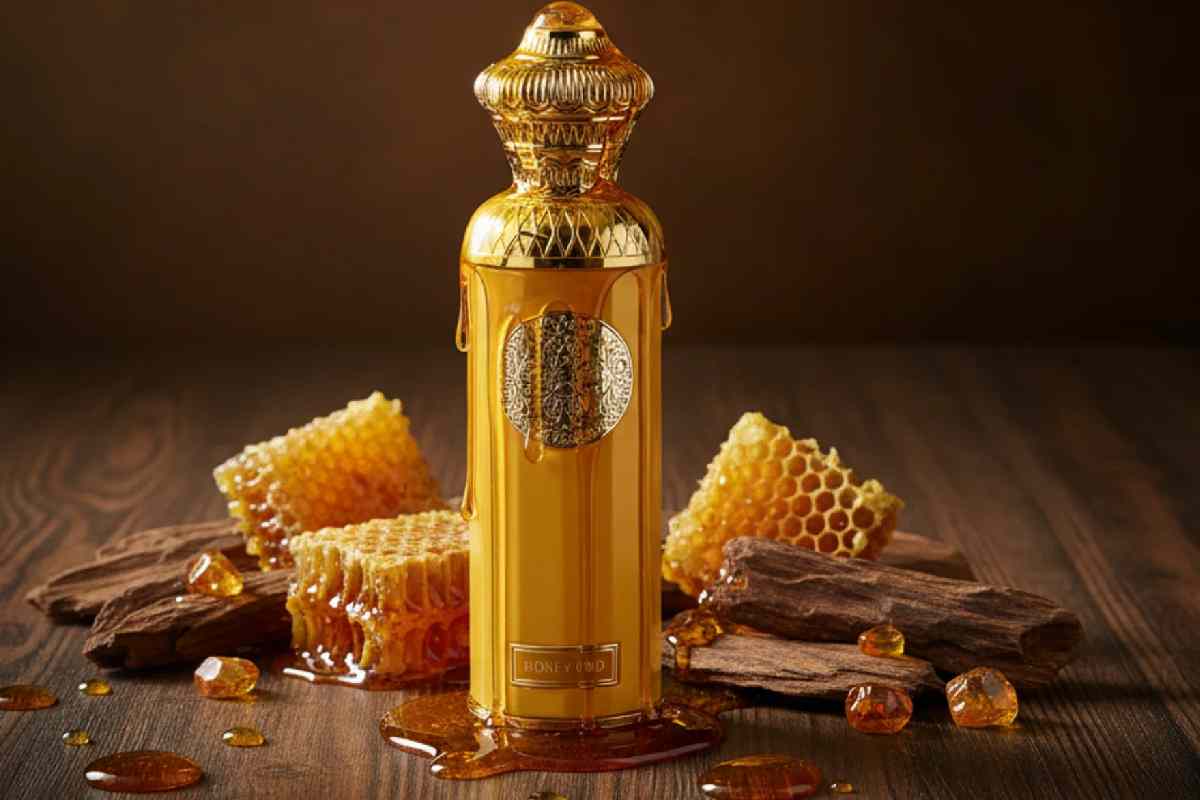
Spend enough time around serious fragrance people and you’ll hear this debate constantly. Someone picks up a honey oud and says it smells incredible. Someone else, usually the one with the deeper collection, says it’s not real oud, though. Both of them are kind of correct and kind of missing the point at the same time.
The two aren’t competing versions of the same thing. Calling them that is like saying a bourbon barrel and a glass of sweet tea are both just wood and liquid. Sure. Technically. But that framing doesn’t help you choose one for a Tuesday night.
Table of Contents
Traditional Oud Is a Whole Personality
Before comparing it to honey oud, you need to understand what traditional oud actually is on its own terms.
The Aquilaria tree produces its resinous heartwood only after a specific fungal infection takes hold deep in the wood, a process that takes years and can’t be rushed or manufactured. What comes from that process is dense, intensely aromatic material that behaves unlike anything else in perfumery.
On the skin, it goes smoky first. Then Woody. Then something harder to name, a faint animalic quality that serious wearers describe as the ingredient’s soul and first-time wearers sometimes find jarring. That edge is not a flaw. It’s the point. Traditional oud doesn’t soften itself for a Western audience. It doesn’t soften itself for anyone.
People raised in Gulf households where oud chips were burned before guests arrived have a completely different relationship to that intensity than someone encountering it through a department store sample. Neither experience is wrong. The scent just lands differently depending on what your nose already associates with it.
Projection on a well-constructed traditional oud composition is real and sustained. Wear it to dinner, and the fabric still registers it the next morning.
Honey Changes the Entry Point, Not the Foundation
Honey oud keeps the oud. That’s the part worth saying clearly before anything else. A well-made honey oud isn’t oud with the interesting parts removed and sweetness poured in to compensate. The resinous base is still doing the structural work underneath everything.
What honey does is change where the fragrance starts. The opening of a honey oud composition is warmer and more immediately comfortable than traditional oud tends to be, almost edible for the first stretch of wear. That sweetness gives unfamiliar noses something friendly to hold onto while the oud underneath builds toward its fuller character.
After an hour or so, the honey settles back. It doesn’t disappear, but it stops leading. The oud character becomes more present, and the whole composition shifts into something drier and more complex. By late dry-down, you’re mostly in the oud base with a warmth underneath that reads personal rather than sweet.
That arc is the real difference. Honey oud moves through stages. Traditional oud commits to a register and stays there.
Wear Time, Honestly
Raw longevity goes to traditional oud, and it isn’t particularly close. Resinous aromatic compounds are some of the most persistent materials in perfumery. A serious traditional oud applied in the morning will still be on your skin by evening and on your clothing the following day.
Honey oud lasts well, but the experience of wear time feels shorter because the composition evolves rather than sustaining one consistent projection. The opening phase fades into the mid phase, the mid phase settles into the base, and by hour six or seven, you’re wearing something quiet and skin-close rather than the fuller presence from the morning. In terms of actual hours on skin, the difference is smaller than it feels. In terms of how noticeable the fragrance is to people around you, traditional oud stays louder longer.
What that means practically is honey oud suits people who want depth without sustained intensity across an entire day. Not a lesser experience. A different one.
Which Situation Calls for Which
Traditional oud makes sense when the presence is appropriate. Formal evenings, occasions with real cultural context, situations where the depth and history of the ingredient add meaning beyond just smelling good.
Honey oud fits more into daily life. Not because it’s lesser, but because it doesn’t ask the same amount from the people around you. You can wear it to a meeting, on a date, or through a full workday, without negotiating your fragrance against the environment. The depth is there. It just isn’t announcing itself constantly.
Conclusion
Choosing between honey oud and traditional oud is really a question about how public you want the experience to be.
Traditional oud projects outward and holds that projection. Honey oud turns inward over time, becoming more personal as the hours pass. Both take the ingredient seriously. The difference is in what kind of day and what kind of company you’re dressing for.
Once you understand that, the choice between them stops feeling complicated.